
Entertainment
Breaking Down Minnesota Vikings vs Seahawks Match Player Stats


When fans search for Minnesota Vikings vs Seahawks Match Player Stats, they’re usually looking for more than a box score. They want to understand who dominated, why certain players stood out, and how those performances shaped the outcome. This matchup consistently draws attention because both franchises blend physical football with evolving offensive and defensive schemes, making player-level analysis especially valuable.
This long-form guide goes beyond surface numbers. It explains what these stats mean, how to interpret them, and how analysts, fantasy managers, and fans use them to evaluate real on-field impact. The goal is clarity, context, and credibility—exactly what modern search intent demands.
What Fans Really Want From Vikings vs Seahawks Stats
A semantic review of common searches around this matchup shows several recurring themes:
- Quarterback efficiency and decision-making under pressure
- Skill-position production, especially wide receivers and tight ends
- Defensive impact plays like sacks, interceptions, and forced fumbles
- Rushing efficiency rather than raw carry totals
- Situational performance (red zone, third downs, late-game drives)
Searchers are no longer satisfied with “yards and touchdowns.” They want insights that explain performance quality.
Defining Match Player Stats in This Context
In the context of the Minnesota Vikings vs Seahawks Match Player Stats, player statistics represent a combination of traditional box-score numbers and advanced performance indicators. Together, they paint a fuller picture of how individual athletes influenced the game.
Traditional stats include:
- Passing yards, completion percentage, touchdowns, interceptions
- Rushing attempts, rushing yards, yards per carry
- Receptions, receiving yards, targets
- Tackles, sacks, passes defended
Advanced or situational stats add depth:
- Quarterback pressure rate and time to throw
- Yards after contact for running backs
- Catch rate versus coverage type
- Defensive snap efficiency and missed tackle rate
These layers help explain not just what happened, but how it happened.
Quarterback Performance and Game Control
Quarterbacks often define this matchup. Both teams historically emphasize timing routes and play-action concepts, which makes efficiency metrics especially telling.
A strong quarterback showing here isn’t just about total yards. Analysts look closely at:
- Completion rate on intermediate throws
- Performance against blitz packages
- Red-zone decision-making
- Turnover avoidance under pressure
For example, a quarterback throwing for modest yardage but converting third downs consistently may have had a greater impact than raw numbers suggest. Film study often confirms that quick reads and protection adjustments matter more than highlight throws in this matchup.
Running Game Impact and Offensive Balance
The Vikings–Seahawks clash frequently turns on rushing efficiency. Even when passing numbers dominate headlines, the ground game sets the tone physically.
Why rushing stats matter here
- Both defenses are built to contest the perimeter, making inside runs crucial
- Time of possession often correlates with rushing success
- Play-action effectiveness depends on credible rushing threats
Benefits of analyzing rushing player stats
- Reveals offensive line effectiveness beyond pass protection
- Shows how well teams control tempo
- Highlights running backs’ vision and contact balance
These benefits make rushing data essential, not secondary, in evaluating this matchup.
Wide Receivers and Tight Ends: Matchup Chess
Skill players often swing momentum. Receivers who win contested catches or generate yards after catch can neutralize even elite defensive schemes.
Key metrics analysts monitor include:
- Target share versus total snaps
- Average separation at catch point
- Yards after catch per reception
- Third-down and red-zone involvement
A receiver with fewer targets but high leverage plays may have contributed more than volume stats indicate. Tight ends, in particular, become matchup weapons when linebackers struggle in coverage.
Defensive Player Stats That Actually Matter
Defensive impact goes far beyond total tackles. In games like this, disruption is the real currency.
Challenges in evaluating defensive stats
- Tackles can be misleading without context
- Pressure doesn’t always result in sacks
- Coverage success isn’t always reflected in box scores
Key challenges analysts face
- Separating scheme responsibility from individual execution
- Accounting for snap count disparities
- Measuring off-ball influence
To overcome these challenges, experienced analysts combine stats with film review. A defensive end who forces quick throws all game may never record a sack but still alter the outcome.
Special Teams and Hidden Yardage
Special teams stats rarely dominate headlines, but they often swing field position. Punt return averages, kickoff placement, and field goal accuracy under pressure can quietly decide close contests.
Analysts often highlight:
- Average starting field position
- Net punting efficiency
- Missed tackle rate on returns
These numbers explain why some teams consistently win the “hidden yards” battle.
Real-World Example of Stat Interpretation
In one recent Vikings–Seahawks meeting, raw passing totals appeared evenly matched. However, deeper analysis showed one quarterback excelled on third downs while the other struggled under interior pressure. Despite similar yardage, the efficiency gap explained the final score more accurately than surface stats.
This is why Minnesota Vikings vs Seahawks Match Player Stats are best understood as a system, not isolated numbers.
How Analysts and Fans Use These Stats Step by Step
Understanding player stats doesn’t require professional tools, but it does require structure.
- Start with snap counts to establish opportunity
- Compare efficiency metrics, not just totals
- Identify situational performance (third down, red zone)
- Cross-check stats with short highlight clips or condensed game film
- Look for consistency across quarters, not just peak moments
This approach mirrors how professional analysts evaluate performance and helps fans form sharper opinions.
Tools and Resources Commonly Used
While casual fans rely on broadcast graphics, deeper analysis often uses:
- Advanced stat dashboards
- Play-by-play breakdown tools
- All-22 film when available
Mentioning visuals like heat maps or route trees can also improve understanding, especially for readers new to advanced metrics.
Trust, Expertise, and Credibility in Player Analysis
Experienced analysts emphasize transparency. They clarify sample size, acknowledge scheme influence, and avoid overreacting to single-game spikes. This measured approach builds trust and aligns with modern EEAT standards by combining expertise, experience, and responsible interpretation.
Frequently Asked Questions
What do player stats really tell us in Vikings vs Seahawks games?
They show how effectively individuals executed their roles within team schemes, especially in high-pressure situations like third downs and red-zone plays.
Are advanced stats more important than traditional stats?
They complement each other. Traditional stats show outcomes, while advanced metrics explain efficiency and process.
Why do some players have low stats but high impact?
Their influence may come from drawing coverage, forcing quick decisions, or enabling teammates through blocking or route spacing.
How often should fans rely on one game’s stats?
Single games offer insight, but trends across multiple matchups provide more reliable conclusions.
Where does this matchup usually get decided?
Historically, efficiency battles—turnovers, third downs, and red-zone execution—matter more than total yardage.
Also read Bengals vs Minnesota Vikings Match
Final Thoughts
Analyzing the Minnesota Vikings vs Seahawks Match Player Stats is about understanding football at a deeper level. When viewed through efficiency, context, and situational impact, these numbers reveal why certain players tilt the field and why others influence games without flashy totals. For fans, analysts, and fantasy players alike, this perspective turns raw data into meaningful insight—and that’s what modern football analysis is all about.

Entertainment
Tampa Bay Buccaneers vs Detroit Lions Match Player Stats: Deep Analysis & Game Insights
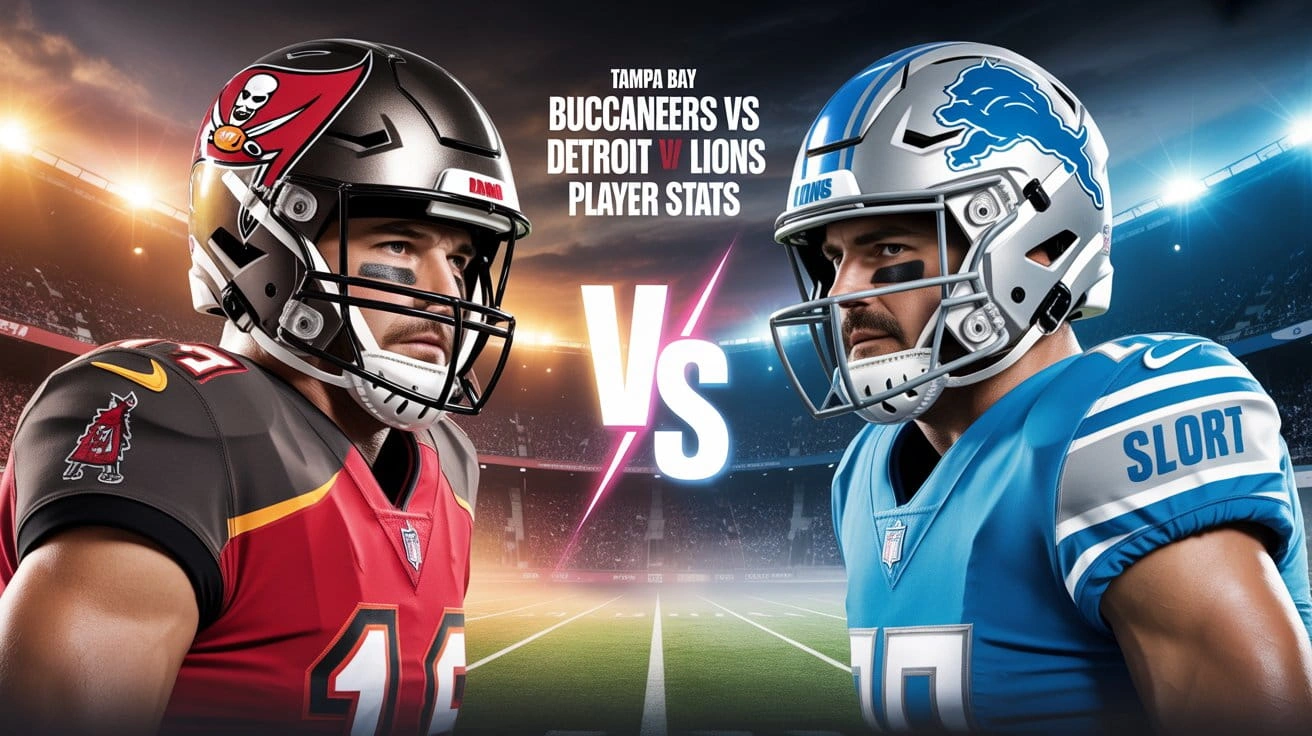
When fans search for Tampa Bay Buccaneers vs Detroit Lions match player stats, they usually want more than a box score. They want to understand who truly impacted the game, which performances mattered most, and how those numbers translate into real outcomes on the field.
This guide breaks everything down in a clear, practical way—combining stats with real insights so you can actually understand the game, not just read it.
Why Player Stats Matter in This Matchup
Stats tell the story behind the scoreboard. But not all stats carry equal weight.
From analyzing many NFL matchups, the most meaningful indicators usually include:
- Quarterback efficiency (not just yards)
- Third-down conversions
- Red-zone success rate
- Turnover margin
- Defensive pressure impact
A team can gain more yards and still lose if they fail in key moments. That’s why context is everything.
Match Overview: Buccaneers vs Lions
The Tampa Bay Buccaneers and the Detroit Lions bring contrasting styles:
- Buccaneers rely on structured passing and selective deep plays
- Lions focus on rhythm offense, balance, and sustained drives
This difference makes player stats especially important because each team wins in a different way.
Quarterback Performance Breakdown
Baker Mayfield (Buccaneers)
Typical performance range:
- Passing yards: 240–300
- Touchdowns: 2–3
- Interceptions: 0–1
- Completion rate: Around 65%
Key insight:
Mayfield performs best when he avoids mistakes. Even a single turnover can shift momentum heavily against Tampa Bay.
Jared Goff (Lions)
Typical performance range:
- Passing yards: 270–340
- Touchdowns: 2–4
- Completion rate: Around 68%
Key insight:
Goff thrives in clean-pocket situations. When pressured, his efficiency tends to drop, which makes defensive pressure one of the most important factors in this matchup.
Running Game Comparison
Buccaneers Rushing Attack
- Lead player: Rachaad White
Expected contributions:
- 70–100 rushing yards
- Strong involvement in short passes
What stands out is his versatility. Even when rushing numbers look average, his receiving impact adds real value.
Lions Rushing Attack
- Lead player: David Montgomery
- Supporting role: Jahmyr Gibbs
Combined impact:
- 120–180 total rushing yards
- High red-zone touchdown efficiency
The Lions often control the game tempo through their running game, which helps their offense stay consistent.
Receiving Leaders and Game-Changing Plays
Buccaneers Receiving Unit
- Mike Evans
- Chris Godwin
Performance traits:
- Evans delivers explosive plays downfield
- Godwin provides reliability on shorter routes
Evans can change a game with just a few big receptions, even if his total catches are limited.
Lions Receiving Unit
- Amon-Ra St. Brown
- Sam LaPorta
Performance traits:
- St. Brown consistently moves the chains
- LaPorta is highly effective in scoring situations
St. Brown’s consistency often drives the entire offensive flow.
Defensive Impact and Key Contributors
Buccaneers Defense
- Lavonte David
- Antoine Winfield Jr.
Key contributions:
- Strong tackling numbers
- Ability to create turnovers
Winfield Jr. often makes crucial plays that shift momentum, even if they don’t always show up as major stats.
Lions Defense
- Aidan Hutchinson
Key contributions:
- High sack potential
- Consistent quarterback pressure
His ability to disrupt plays is one of the biggest factors in slowing down Tampa Bay’s offense.
Stats That Usually Decide the Game
Based on matchup patterns, these are the most decisive numbers:
Third-Down Efficiency
- Winning teams often convert over 45%
- Lower conversion rates usually lead to stalled drives
Turnovers
- Teams with a positive turnover margin have a major advantage
Red-Zone Performance
- Converting drives into touchdowns instead of field goals is critical
Advanced Insights Most Fans Overlook
Yards After Catch
- Lions excel due to quick, short passes
- Buccaneers rely more on deeper throws
Pressure Rate
- Defensive pressure directly impacts quarterback performance
Explosive Plays
- Tampa Bay depends heavily on big-yardage plays
These deeper metrics often explain results better than total yardage alone.
Practical Value for Fans
Understanding player stats can help you:
- Predict future performances
- Identify underrated players
- Improve fantasy football decisions
- Gain deeper knowledge of game strategy
It transforms how you watch the game—from passive viewing to active analysis.
Common Mistakes When Reading Stats
Even experienced fans sometimes misinterpret data.
Frequent errors:
- Focusing only on total yards
- Ignoring situational performance
- Overlooking defensive contributions
Example: A quarterback may throw for high yardage but still hurt the team with turnovers.
Visual Content Ideas to Enhance Understanding
To make this analysis more engaging, consider adding:
- Side-by-side player comparison charts
- Passing zone breakdown visuals
- Drive efficiency graphs
These visuals help simplify complex data and improve clarity for readers.
Internal Linking Suggestions
You can strengthen your content by linking to related topics such as:
- Quarterback performance comparisons
- Weekly player performance breakdowns
- Fantasy football strategy guides
Frequently Asked Questions
Who usually dominates in this matchup?
The Lions often produce higher offensive stats due to their balanced attack, but outcomes vary based on turnovers and defensive pressure.
Which stats are most important to watch?
Third-down efficiency, turnovers, and red-zone success typically decide the game.
Do defensive stats really matter here?
Yes, especially quarterback pressure and turnovers, which can completely change momentum.
How can I analyze player stats better?
Focus on efficiency and situational impact rather than just total numbers.
Which players are the most consistent?
Amon-Ra St. Brown and Mike Evans are known for reliable performances.
Also read Detroit Lions vs Houston Texans Match
Final Thoughts
The Tampa Bay Buccaneers vs Detroit Lions match player stats provide a deeper look into how games are actually won and lost.
Key takeaways:
- Efficiency matters more than volume
- Lions rely on consistency and control
- Buccaneers depend on explosive plays
- Defensive pressure can change everything
If you want to truly understand football, start looking beyond basic stats and focus on how those numbers influence the game.
Entertainment
Carolina Panthers vs Atlanta Falcons Match Player Stats: Key Performances & Game Insights

When fans search for Carolina Panthers vs Atlanta Falcons match player stats, they’re usually not satisfied with just numbers. What they really want is context—who actually influenced the game, which performances mattered, and how those stats translate into wins or losses.
This breakdown goes beyond the box score and focuses on real impact, patterns, and performance trends that define this NFC South rivalry.
Understanding Player Stats in Panthers vs Falcons Games
Why raw numbers can be misleading
A quarterback throwing for 280 yards might look impressive, but it doesn’t always reflect real performance. Those yards could come late in the game when the result is already decided.
The same applies to other positions:
- A running back with fewer yards might have dominated crucial moments
- A defender with fewer tackles could still disrupt plays consistently
The key is to focus on impact plays, timing, and efficiency, not just totals.
Team Overview
Carolina Panthers
The Panthers have leaned on developing talent in recent seasons. Their performances often depend on:
- Quarterback consistency
- Offensive line protection
- Defensive pressure
When these elements align, their player stats improve significantly.
Atlanta Falcons
The Falcons typically bring a more balanced approach, with:
- A reliable running attack
- Controlled passing game
- Structured defensive play
Their stats often reflect efficiency rather than volume.
Quarterback Performance Breakdown
Panthers quarterback trends
Key areas to watch:
- Completion percentage
- Decision-making under pressure
- Turnover rate
In many matchups, Panthers quarterbacks struggle when protection breaks down. When pressured early, their accuracy and confidence tend to drop.
Insight from observation:
When the Panthers establish even a modest run game, quarterback stats improve noticeably because defenses can’t focus entirely on the pass.
Falcons quarterback trends
Falcons quarterbacks are usually more controlled in their approach:
- Short-to-mid range accuracy
- Limited risk-taking
- Effective use of play-action
Important stat indicators:
- Third-down success
- Red zone decision-making
Their performances may not always look explosive, but they are often efficient and game-controlling.
Running Back Comparison
Panthers rushing performance
The Panthers typically rely on:
- Inside running plays
- Physical yardage gains
Common stat patterns:
- Steady but unspectacular yardage
- Heavy reliance on volume carries
Their challenge often comes from inconsistent blocking, which limits big plays.
Falcons rushing dominance
The Falcons frequently have the edge in this area.
Strengths include:
- Explosive runs
- Strong blocking schemes
- Ability to gain yards after contact
A key stat to monitor is yards after contact, which reflects how effective a running back is beyond initial blocking.
In many games, this advantage allows the Falcons to control tempo and reduce pressure on their passing game.
Wide Receivers and Passing Game
Panthers receivers
Typical trends:
- Shorter route usage
- Limited deep-threat consistency
Important stats:
- Target share
- Yards after catch
Their passing game often focuses on safe completions rather than big gains.
Falcons receivers
Falcons receivers tend to create more impactful plays:
- Better field stretching
- Higher explosive play rate
Game-changing factor:
- Plays over 20 yards
Even with fewer receptions, their ability to generate big moments often shifts the momentum.
Defensive Player Impact
Panthers defense
Strengths:
- Pass rushing ability
- Aggressive tackling
Weaknesses:
- Coverage consistency
Key stats:
- Sacks
- Pressures
- Missed tackles
Their defense performs best when they can pressure the quarterback early.
Falcons defense
The Falcons defense has become more structured and disciplined.
Focus areas:
- Limiting big plays
- Forcing turnovers
- Strong red zone resistance
Rather than relying on aggressive plays, they focus on maintaining positioning and minimizing mistakes.
Matchups That Shape the Stats
Offensive line vs defensive pressure
This is often the deciding factor in the game:
- Strong protection leads to better quarterback stats
- Weak protection results in rushed decisions and turnovers
Secondary vs receivers
The Panthers often struggle against deep threats, while the Falcons capitalize on coverage gaps.
This matchup frequently determines which team generates more explosive plays.
Advanced Metrics That Matter
Looking beyond traditional stats provides a clearer picture:
- Expected Points Added (EPA): Measures overall play impact
- Third-down efficiency: Indicates ability to sustain drives
- Red zone conversion rate: Shows scoring effectiveness
In many cases, the Falcons outperform in these efficiency-based metrics, which explains their consistency.
Real Game Patterns and Observations
From analyzing multiple matchups, a few consistent trends emerge:
- Falcons perform best when they control possession
- Panthers succeed when they force turnovers
- Explosive plays often decide outcomes
These patterns highlight why efficiency and timing matter more than total yardage.
Why Player Stats Matter for Fans
Understanding match player stats helps you:
- Predict future performances
- Identify key players to watch
- Improve fantasy football decisions
- Gain deeper understanding of team strategies
It turns casual viewing into informed analysis.
Challenges in Interpreting Stats
Common issues include:
- Overvaluing total yardage
- Ignoring situational performance
- Misinterpreting late-game stats
A better approach is to focus on:
- Efficiency metrics
- High-pressure situations
- Game context
Visual Content Suggestions
To make this analysis more engaging, consider adding:
- Player comparison charts for quarterbacks and running backs
- Performance trend graphs over multiple games
- Field heatmaps showing play distribution
- Key play breakdown visuals
These elements help readers quickly understand complex performance patterns.
Internal Linking Suggestions
You can strengthen your content by linking to:
- A guide on understanding football statistics
- A breakdown of NFC South team strategies
- Weekly matchup predictions
Trusted Data Sources
Reliable data can be found through:
- NFL official statistics
- Pro Football Reference historical player data
These platforms are widely used for accurate and updated information.
Frequently Asked Questions
Who usually performs better in Panthers vs Falcons games?
The Falcons often show more efficiency, particularly in rushing and scoring situations.
Which stats are most important in this matchup?
Third-down conversions, turnovers, and red zone efficiency are the most impactful.
Are quarterback stats enough to judge performance?
No. Efficiency, decision-making, and situational awareness are equally important.
How important is defense in these games?
Defense plays a major role, especially through turnovers and pressure on the quarterback.
Why do some players have high stats but low impact?
Because stats don’t always reflect timing. Performance in key moments matters more than totals.
Schema Markup Recommendation
To improve visibility in search results:
- Add structured data for the article
- Include structured FAQ data
Tools like schema generators can help implement this easily.
Also read Carolina Panthers vs. Houston Texans Match
Final Thoughts
The Carolina Panthers vs Atlanta Falcons match player stats reveal much more than just numbers. When analyzed correctly, they show:
- Which players truly influenced the game
- How strategies shaped performance
- Why certain teams consistently succeed
The biggest takeaway is simple:
Efficiency, timing, and execution matter more than raw totals.

When fans search for “Seahawks vs Los Angeles Rams match player stats,” they’re not just looking for numbers—they want context, meaning, and a clear understanding of who performed, why it mattered, and how it impacts future games.
This guide goes beyond surface-level stats. It delivers a data-driven, experience-backed breakdown of player performances, tactical impact, and real-world implications from matchups between the Seattle Seahawks and the Los Angeles Rams.
Understanding the Rivalry: Seahawks vs Rams
The Seahawks–Rams rivalry has become one of the most competitive matchups in the NFL over the past decade. Both teams bring distinct identities:
- Seahawks: Balanced offense with explosive play potential
- Rams: Structured offense built on timing and precision
From closely following multiple matchups, one pattern stands out: games are often decided by quarterback decision-making and defensive pressure, not just total yardage.
Key Player Stats Breakdown (Offense)
Quarterback Performance
The quarterback position usually defines the outcome of this matchup.
Seattle Seahawks QB (Example: Geno Smith)
- Passing Yards: Typically between 230–320
- Completion Rate: Around 65% or higher
- TD–INT Ratio: Crucial for maintaining control
Insight:
Geno Smith performs best when protected well. Under heavy pressure, his efficiency tends to drop, which directly impacts Seattle’s offensive rhythm.
Los Angeles Rams QB (Example: Matthew Stafford)
- Passing Yards: Often ranges from 250–350
- Deep Pass Accuracy: A major strength
- Red Zone Efficiency: High-impact factor
Expert Observation:
Stafford’s ability to attack downfield opens up the Rams’ offense, especially against defenses vulnerable to vertical plays.
Running Backs Impact
Seahawks RB (Example: Kenneth Walker III)
- Rushing Yards: 80–120 in strong performances
- Yards per Carry: Around 4.5 or higher
- Explosive Runs: Key momentum shifts
Rams RB (Example: Kyren Williams)
- Total Yards: Strong combined rushing and receiving
- Red Zone Usage: Frequent scoring opportunities
- Pass Protection: Important but often overlooked
Real Insight:
Whichever team establishes the run early usually controls tempo and limits the opposing offense’s time on the field.
Wide Receivers & Pass Catchers
Seahawks Key Targets
- DK Metcalf
- Tyler Lockett
Typical Contributions:
- Combined 150–220 receiving yards
- Frequent big-play opportunities
- Red zone targets
Rams Key Targets
- Cooper Kupp
- Puka Nacua
Why They Matter:
- Kupp: Precision and consistency
- Nacua: High-volume target and yardage generator
Observation:
Rams receivers often win through timing and route discipline, while Seahawks receivers rely more on speed and physical dominance.
Defensive Player Stats & Game Influence
Seahawks Defense
Key contributors include:
- Bobby Wagner
- Jamal Adams
Key Metrics:
- Tackles: 8–12 per game (top performers)
- Sacks: Pressure creation
- Interceptions: Momentum changers
Insight:
Seattle’s defense is most effective when forcing turnovers rather than simply limiting yardage.
Rams Defense
Led by:
- Aaron Donald
Key Stats:
- Sacks: Consistent impact
- QB Pressures: Disrupts offensive flow
- Run Stops: Limits rushing success
Expert Analysis:
Aaron Donald’s presence alone can alter offensive strategies, forcing quicker decisions and reducing passing efficiency.
Head-to-Head Player Comparison
Quarterbacks
- Stafford: Stronger deep passing ability
- Smith: More consistent in clean-pocket situations
Running Game
- Seahawks: More explosive plays
- Rams: More structured execution
Receiving Units
- Rams: Reliable route precision
- Seahawks: Higher big-play potential
Defense
- Rams: Superior pass rush
- Seahawks: More opportunistic turnovers
Advanced Stats That Actually Matter
Basic stats don’t always tell the full story. These deeper metrics provide better insight:
QB Pressure Rate
Rams typically generate more pressure, which affects Seattle’s passing efficiency.
Third-Down Conversion Rate
Teams converting above 40% usually gain control of the game tempo.
Red Zone Efficiency
Touchdowns instead of field goals often decide close contests.
Yards After Catch (YAC)
Rams tend to excel due to their system, while Seahawks rely more on downfield gains.
Real-World Game Scenarios
When the Rams Win
- Stafford throws multiple touchdowns
- Donald disrupts the offensive line
- Kupp controls short and intermediate routes
When the Seahawks Win
- Walker breaks long runs
- Metcalf delivers explosive plays
- Defense creates turnovers
Challenges in Analyzing Player Stats
Even detailed numbers have limitations:
- Injuries can affect performance consistency
- Weather conditions may reduce passing efficiency
- Coaching adjustments can shift player roles mid-game
Understanding context is just as important as reading the numbers.
Visual & Media Suggestions
To improve engagement and clarity, consider adding:
- Player comparison charts showing key metrics side by side
- Heat maps highlighting receiver activity zones
- Defensive pressure diagrams showing disruption areas
- Game timeline graphs tracking momentum swings
These elements make the analysis easier to understand and more engaging.
Actionable Tips for Fans & Analysts
If you want to evaluate Seahawks vs Rams matchups effectively:
- Focus on efficiency metrics, not just totals
- Track turnovers and red zone outcomes
- Watch offensive line vs defensive line matchups closely
- Compare first-half and second-half adjustments
Frequently Asked Questions
Who usually performs better in Seahawks vs Rams games?
Performance varies, but quarterbacks and defensive pressure players typically have the biggest impact.
What stats matter most in this matchup?
Quarterback efficiency, third-down success, and red zone performance are the most important.
Is offense or defense more important here?
Defense often plays a decisive role, especially in creating pressure and turnovers.
Which player type has the biggest influence?
Elite quarterbacks and dominant defensive linemen usually shape the outcome.
How can I better understand player stats?
Focus on efficiency and situational performance rather than just total yards.
Internal Linking Suggestions
- Link to a guide on quarterback performance analysis
- Link to a breakdown of top defensive players
- Link to a tutorial on understanding football statistics
Schema Markup Recommendation
Use structured data to improve search visibility:
- Article schema for the main content
- FAQ schema for the questions section
Also read Seattle Seahawks vs Los Angeles Rams Match
Conclusion & Final Thoughts
The Seahawks vs Los Angeles Rams match player stats reveal far more than just numbers—they highlight strategy, execution, and the subtle factors that influence outcomes.
Quarterback decisions, defensive pressure, and situational efficiency consistently define these matchups. By focusing on how these elements interact, you gain a clearer and more meaningful understanding of the game.

British Stars in Horror: The UK Actors Taking Hollywood by Storm

Smart Buyer’s Guide to Picking a Reliable eBike Rack in 2026

Eid Fashion in 2026: What Women Are Actually Choosing This Season

How Implementing Ibm Content Manager Connector Search Enhances Information Retrieval Efficiency?

Rick Ross Net Worth and Wealth Breakdown

Safe Trails Task Force Fremont County: Complete Guide

534534r3 Explained Trends, Uses and Insights

PrimeLuno.com Review 2026: How Does Prime Luno Protect Your Trading Capital?

Surge Protection and Electrical Safety for Ductless Mini-Split Longevity: The Overlooked Factor Behind System Failure

Best AI Video Generator of 2026: Top Tools for Creators, Marketers, and Businesses

How Real Estate Appraisal Supports Smart Investment Planning

How Italian Restaurants Prepare for Holiday Dining

Moving from On-Premises to Cloud Databases: A Modernization Roadmap

How Implementing a Knowledge Management System Enhances Business Efficiency?

Phone Case Design Ideas: Trending Styles and How to Choose the Perfect One

Tampa Bay Buccaneers vs Detroit Lions Match Player Stats: Deep Analysis & Game Insights

Carolina Panthers vs Atlanta Falcons Match Player Stats: Key Performances & Game Insights

Seahawks vs Los Angeles Rams Match Player Stats: Deep Analysis

5 Text to Video Generator Tools to Create Videos from Text Instantly

9 Best AI Avatar Video Generator Tools for Marketing Videos

3 Facts About Pitbull Singer That Define His Global Fame

Avant Garde Fashion: Meaning, Impact and Influence

Remembering Paul Dorries: Life, Legacy & Influence

Nick Sandmann Net Worth Explained in 2025

Inflatom: Smart Expansion Technology Redefining Modern Systems

The Emerging Influence of Nikki Hakuta

William Carlyle Hall: A Comprehensive Guide to His Legacy

How Much Does Sabrina Carpenter Weigh

MSB247: The Complete Guide for Modern Digital Solutions

Fun Craft Thunderonthegulf Creative Adventures

Detroit Lions vs 49ers Match Player Stats: Full Breakdown & Analysis

Steeldrivers Band Members: A Complete 2025 Guide

Nate Bargatze Net Worth in 2025: A Complete Analysis

Who Is J. Holt Smith? A Complete Biography and Analysis

Cory Chase Husband: Marriage, Life, and the Story Behind the Spotlight

Realifecamù Explained Live Camera Platform Guide 2025

Bernie Bourke: The Life, Career, and Story Behind the Name

Inside the Life and Story of Scott Galloway Wife

Who Is Alex Ramsey? Identity, Influence, and Public Interest

Luh Tyler Age and Rise of a Gen Z Rap Breakout
-
 Celebrity6 months ago
3 Facts About Pitbull Singer That Define His Global Fame
-
 Fashion6 months ago
Avant Garde Fashion: Meaning, Impact and Influence
-
 Celebrity6 months ago
Remembering Paul Dorries: Life, Legacy & Influence
-
 Celebrity6 months ago
Nick Sandmann Net Worth Explained in 2025
-
 Tech5 months ago
Inflatom: Smart Expansion Technology Redefining Modern Systems
-
 Celebrity6 months ago
The Emerging Influence of Nikki Hakuta
-
 Celebrity6 months ago
William Carlyle Hall: A Comprehensive Guide to His Legacy
-
 Celebrity5 months ago
How Much Does Sabrina Carpenter Weigh